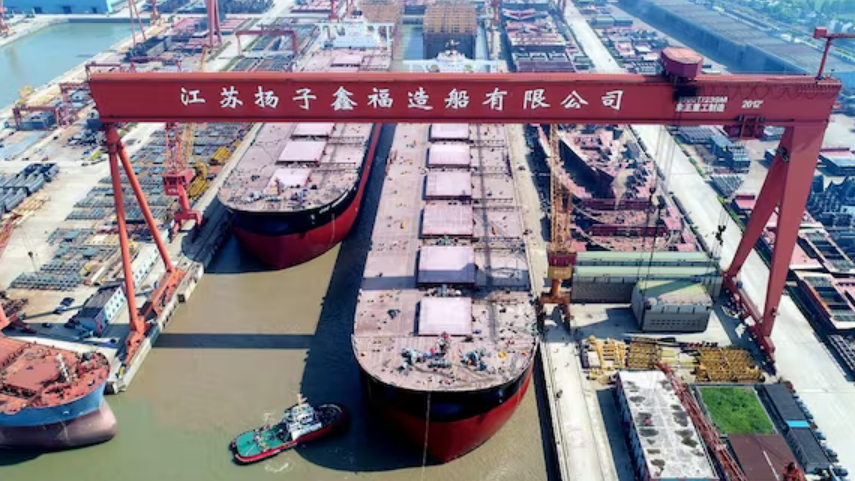
China’s aggressive pricing in the shipbuilding industry is undeniable. However, its implications are often misunderstood. This isn’t a simple story about who can build a hull for less; it is a story about who carries the operational risk for the next 30 years. In the high-stakes world of maritime infrastructure, a low bid is often a high-risk gamble.
1. The Price Gap: Compelling on Paper, Risky in Practice
In the LNG carrier market, the gap is stark:
- China: USD 220–230 million
- Korea: USD 245–255 million
Supported by state-backed financing and lower labor costs, China’s offer looks compelling on a spreadsheet. But shipbuilding isn’t a spot transaction—it is a three-to-five-year commitment. Owners aren’t just buying a vessel; they are buying performance, reliability, and long-term risk management.
2. The Asymmetry of Risk in High-Tech Vessels
As we move toward LNG carriers, CO₂ carriers, and ammonia-fueled ships, the complexity skyrockets. These vessels deal with:
- Cryogenic temperatures (extreme cold)
- High-pressure systems
- Decades of continuous operation in harsh sea conditions
In this segment, the cost structure is inverted: Construction Cost < Operating Risk < Accident Cost. A single technical failure years down the line can erase any upfront savings. When the cost of failure is asymmetric, price loses its priority.
3. Experience: The Unseen Bottleneck
The decisive barriers in shipbuilding aren’t blueprints; they are experience-based bottlenecks.
- LNG cargo containment systems
- Cryogenic welding precision
- Boil-off gas (BOG) control
These aren’t solved by design documents. They are solved by thousands of hours of field data accumulated over decades. While Chinese yards excel at “demonstration projects,” the real test is quality dispersion during mass production. If one ship in a fleet fails, the trust collapses immediately.
4. The Pattern of Diversification
We are seeing a clear pattern among global shipowners:
- They order one or two vessels from China to diversify risk.
- They place the core fleet volume with Korean yards to ensure reliability.
Risk is being managed, not eliminated. This is why major Korean players like HD Hyundai Heavy Industries are deliberately avoiding low-margin volume wars. They are moving “up,” focusing on ammonia-fueled vessels and CO₂ carriers where the “Trust Moat” is widest.
5. A Fragmenting Global Market
China’s advantage is reinforced by government subsidies and state-directed financing. However, a counter-force is strengthening. Geopolitics—driven by US and European energy security—is increasingly leading to “China exclusion” in strategic cargo transport and core infrastructure shipping.
The market isn’t collapsing into a price war; it is splitting.
Final Thought: Trust Controls the Rest
The future of shipbuilding is not a single global market. It is a segmented one.
- Price will always win a certain amount of volume in commoditized shipping.
- Trust will control the high-value, high-risk infrastructure of the future.
As vessels become more capital-intensive and critical to national energy security, the industry rewards the yard that can contain risk, not just the one with the lowest bid.


답글 남기기