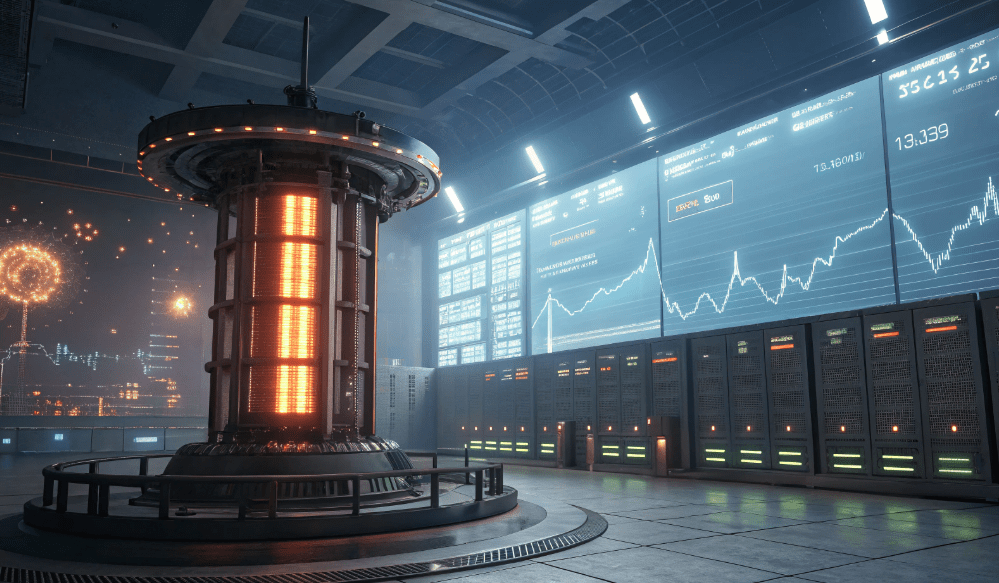
In the race for AI supremacy, the world remains obsessed with chips. We count H100s and Blackwells as if silicon were the only currency that matters. But inside the belly of the modern data center, a far more rigid constraint is emerging—one that cannot be solved by better code or faster transistors.
That constraint is power delivery.
1. When Physics Hits a Wall
AI workloads are pushing server rack density into uncharted territory. We are moving from the 40 kW racks of 2023 to a staggering 600 kW, and eventually, 1 MW+ per rack.
Herein lies the physical trap: If we cannot increase voltage, we must increase current. And as current rises, electrical losses scale at the square of the current ($I^2$). Heat increases exponentially, and efficiency collapses. This isn’t just an engineering headache; it’s a physical limit where the traditional model simply breaks.
2. The 50V Ceiling: A Copper Nightmare
Today’s AI servers mostly run on 48–54V DC. At a 1 MW rack density, that translates to an absurd 20,000 Amperes. The consequences are immediate and messy: copper cables become impossibly thick, airflow is blocked, and power losses skyrocket. Compared to a standard 120 kW rack, a 1 MW rack at current voltages suffers 70 times higher losses. We’ve reached a point where engineering elegance is no longer an option—it’s a necessity for survival.
3. The 800V Revolution: From EVs to Data Centers
The only viable path forward is to raise the voltage and lower the current. This is why 800V DC is emerging as the new gold standard.
By shifting to 800V:
- Efficiency: Power losses can drop by a factor of 256.
- Resources: Copper usage is slashed to 1/16th.
- Thermal Management: Cooling becomes feasible again as cable density decreases.
Interestingly, this isn’t experimental tech. The 800V ecosystem is already maturing, battle-tested by the electric vehicle (EV) industry and high-end industrial power systems.
4. A Structural Shift in Architecture
This transition isn’t just about swapping out parts; it’s a fundamental redesign of the power backbone.
- The Legacy Model: A messy chain of AC-to-DC-to-AC conversions that invites failure and waste.
- The 800V DC Model: A streamlined AC-to-DC backbone with direct rack distribution.
This shift offers up to a 5% gain in efficiency and a 30% reduction in Total Cost of Ownership (TCO). In the world of hyperscale data centers, these aren’t incremental gains—they are structural game-changers.
5. The New AI Power Value Chain
As this architecture takes hold, the “value” in the AI supply chain is migrating toward power specialists:
- Power Semiconductors: The demand for SiC (Silicon Carbide) and GaN (Gallium Nitride) is exploding. Semiconductor content per rack is projected to jump from $15K to over $100K.
- Infrastructure Titans: Companies like Eaton and Vertiv are no longer just “utility” providers; they are the architects of MW-scale mission-critical systems.
- Energy Buffers: Battery Energy Storage Systems (BESS) and fuel cells are evolving from “backup power” to “real-time buffers” that stabilize the massive, fluctuating loads of AI training.
Final Thought: Electricity as the Governing Variable
AI scaling will not stop because models run out of “intelligence.” It will slow down if we cannot deliver power safely, efficiently, and continuously.
In this new cycle, electricity is no longer just an input cost—it is the governing variable of the entire industry. The future of AI will be decided not just by the brilliance of the GPU, but by the elegance of the voltage architecture that feeds it.


답글 남기기