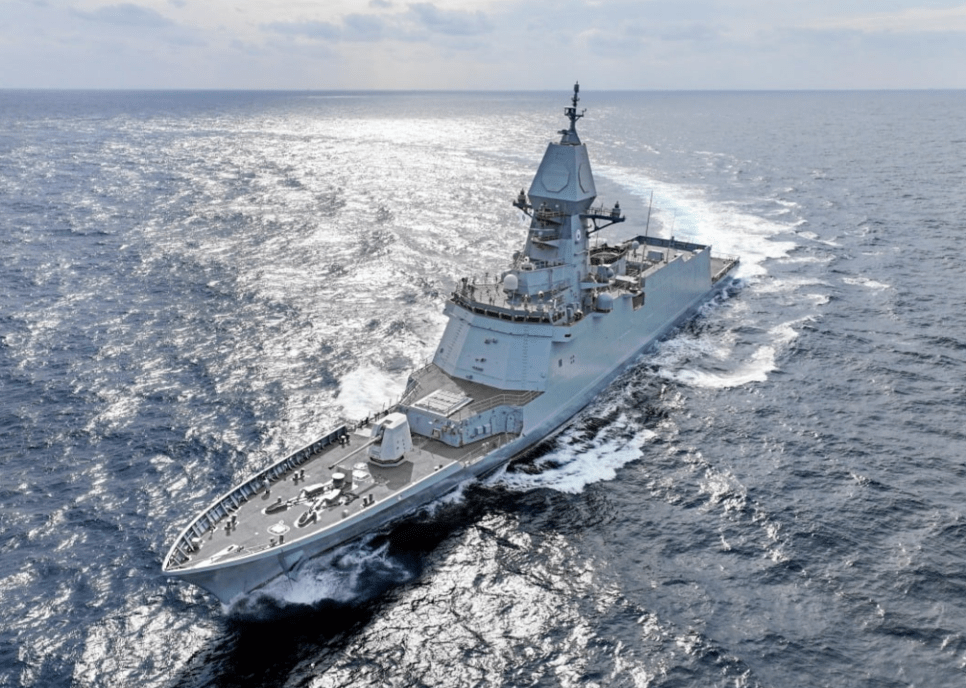
The next phase of shipbuilding is less about who builds the hull and more about who supplies the critical systems inside it.
That is why equipment makers deserve more attention. In many cases, the valuation burden is lower than the big shipyards, while the earnings visibility can actually be clearer. If the market is moving toward LNG dual-fuel, ship electrification, automation, ESS, and higher-spec marine systems, then the more interesting part of the value chain may sit with the companies supplying engines, power systems, insulation materials, lighting, and automation hardware. Hanwha’s recent moves into electric propulsion and Korea’s broader push in ship electrification point in exactly that direction.
1. Why look at marine equipment suppliers now
The appeal of the equipment names is straightforward.
Companies such as Daeyang Electric, STX Engine, SNSYS, and Hankuk Carbon can offer a different kind of exposure from the shipyards themselves. In many cases, they sit in categories where valuations are less demanding, while the end-market growth is already becoming visible through LNG vessels, electrified ships, automation systems, and naval demand. The investment case is not just that the ship cycle is strong. It is that the content per vessel is rising.
2. China’s shipbuilding supply chain still leaves room for outside suppliers
China’s shipbuilding ecosystem is becoming more self-reliant, but that does not mean everything is fully localized.
In practice, high-specification, already-validated, or licensed products can still remain open to outside suppliers. That is why Korean firms can still benefit even when Chinese yards are dominant in orderbook share. Reuters-style shipping coverage and market commentary both show that China’s yards keep expanding, but specialized equipment remains a separate layer of competition. This is one reason Korean suppliers still have room in engines, LNG-related components, and marine control systems.
A good example is Hanwha Engine, which has been benefiting from the boom in dual-fuel propulsion and China-linked orders. Chosun Biz reported in January 2026 that Chinese sales make up a large share of Korean marine engine makers’ revenue and that Hanwha Engine’s order backlog already covers roughly three years. Your draft’s exact 22.7% China D/F share figure is directionally plausible, but I could not verify that precise number from a primary source here, so for WordPress it is safer to describe the company as a growing beneficiary of Chinese dual-fuel ship demand rather than lock in that exact statistic.
Hankuk Carbon also fits this logic well. Its LNG-related insulation materials and secondary barrier positioning remain directly tied to LNG carrier growth, and recent reporting confirmed new LNG tank insulation-material supply contracts in March 2026. The company’s own materials also emphasize BOG minimization and ultra-low-temperature insulation competency.
3. Ship electrification is becoming a structural theme
A modern vessel is increasingly an electrical system as much as a mechanical one.
As ships become more complex, the demand for power generation, distribution, automation, and control rises with them. This is especially true as vessels add reefer loads, BOG handling, emissions equipment, autonomous-navigation layers, and eventually more electrified propulsion configurations. Korea’s own maritime industry is now explicitly pushing electrification as a future growth pillar, and Hanwha has publicly framed electric-propulsion vessels as a new marine-industry paradigm.
That means the value of electrical equipment, power management, switchboards, sensors, automation, and control systems should rise as vessel complexity increases.
4. The heart of marine electrical design is power distribution and automation
The real core of ship electrification is not just batteries or motors.
It is the architecture that connects power generation to final loads across the vessel. That includes switchboards, transformers, distribution panels, PMS, and IAS. PMS matters because it automatically manages generation in response to power demand. IAS matters because it ties together engine control, cargo and ballast control, alarms, safety, and navigation-linked systems. Hanwha’s acquisition of SEAM is important precisely because SEAM specializes in electric propulsion and power automation systems, which shows where the strategic value is moving.
That is why a company aiming to become the “Korean Kongsberg” through integrated shipboard systems is not a bad way to think about this segment.
5. Medium-speed four-stroke engines still matter a lot
The marine engine story is not just about the big low-speed main engines.
In commercial ships, four-stroke medium-speed engines remain important for onboard power generation and auxiliary systems. MAN Energy Solutions’ own published references show how large medium-speed engines continue to be deployed in marine applications, reinforcing that this is still a meaningful market rather than a legacy niche.
That is why STX Engine still deserves attention. Its value lies in the fact that it can serve both civilian and military demand, on land and at sea, giving it a broader industrial optionality than a pure-play merchant-ship engine supplier.
6. In marine lighting, explosion-proof products matter most
Marine lighting is not a trivial category.
In hazardous areas such as tankers, LNG carriers, and engine rooms, explosion-proof lighting is essential, and those products carry much higher unit pricing than ordinary marine LEDs. I did not verify the exact 70%–80% domestic market-share figure for Daeyang Electric from a primary source here, so I would not lock that into the blog as a hard statistic. But the company clearly operates as a specialized provider of marine and naval electrical equipment with a product range spanning lighting, communications, power systems, and sensors.
That is enough to support the broader point:
as ships become more complex and more safety-critical, even categories that look mundane on the surface can become high-value engineered products.
7. Hanwha Engine’s investment path shows where the industry is going
Hanwha Engine’s recent moves tell the story clearly.
First, it remains exposed to marine engines. Then it expanded into electric propulsion and power automation through the acquisition of Norway’s SEAM for about $195 million. Hanwha described this as a way to strengthen clean marine propulsion capabilities, while PwC’s transaction note said SEAM has roughly 40% share in Norway’s electric-propulsion market and provides ESS, electric motors, and integrated control software.
That is exactly the kind of move you make if you believe shipbuilding’s value is migrating from the shipyard floor to the electrical and software layer.
8. How to classify the companies
Daeyang Electric is best understood as a broad marine and naval electrical-equipment player with strengths in lighting, communications, power systems, and sensors.
STX Engine fits the medium-speed engine and defense-linked propulsion angle, with a business profile that can benefit from both merchant and special-purpose demand. Industry context around medium-speed engines supports why this segment still matters.
SNSYS is more naturally viewed as a Korean marine-systems and automation story. I could not verify every detail of the Shanghai IAS market-share claim from a primary source here, so for publication it is safer to frame SNSYS as a company leveraged to the expansion of power, automation, environmental, and operating-system solutions in ships rather than pin down a precise China-share number.
Hankuk Carbon is one of the clearest LNG-insulation exposure plays. Its business remains tightly linked to LNG insulation materials, secondary barrier solutions, and now even ammonia-ready insulation concepts. That makes it a direct beneficiary of LNG carrier content growth rather than just shipyard volume.
The bigger point is this:
in Shipbuilding 2.0, the smarter way to look at the sector may be not just “who wins the order,” but “who supplies the critical content inside the order.”
 The Morning Calm Notebook
댓글 남기기