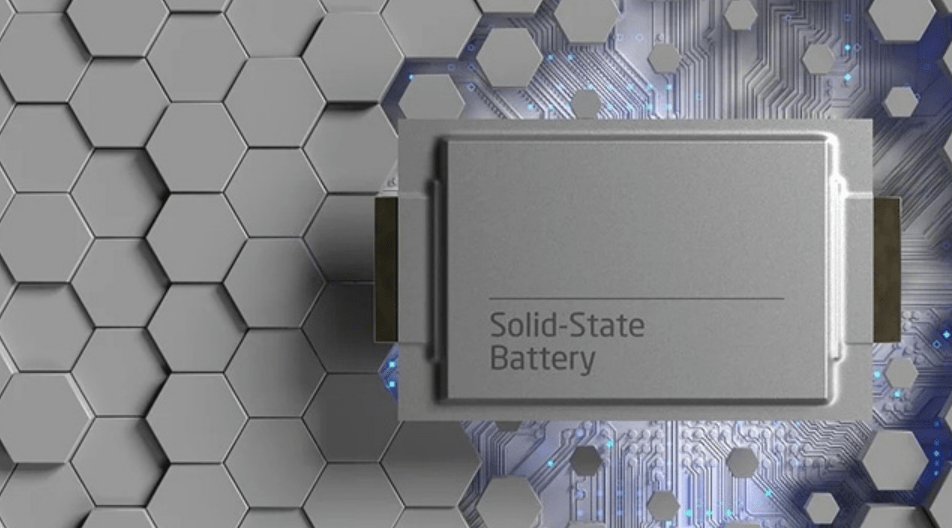
Solid-state batteries are no longer just a laboratory story.
The market is now entering a phase where validation, pilot production, and early commercialization matter more than pure concept enthusiasm. That is why the conversation is changing. The key question is no longer whether solid-state batteries are promising. It is whether the technology can move from technical proof to scalable manufacturing over the next few years. Recent reviews and industry roadmaps suggest that this transition is becoming more realistic, especially for selected use cases that value safety, power density, and compact form factors more than lowest cost.
1. The core of the solid-state story is that commercialization is getting closer
The industry is moving into a period where early commercialization is finally within view.
A reasonable way to frame it today is this: 2027 looks like an early pilot-commercialization window, while the 2030s are still the more realistic phase for broader scale-up. That fits the current industry consensus much better than the older view that solid-state batteries were still purely long-term science. Recent reviews continue to describe solid-state batteries as one of the most promising next-generation platforms because of their safety and energy-density potential, but they also emphasize that the transition to industrial production still depends on solving interfaces, process complexity, and cost.
In other words, this is no longer just a period for research headlines.
It is increasingly a period for watching validation and manufacturing transition.
2. Why the sector is getting attention again
The reason solid-state batteries are attracting attention again is that the addressable market is expanding.
This is no longer only about electric vehicles. New categories such as humanoids, robotics, and advanced air mobility are drawing attention because they place a premium on high energy density, compactness, and safety. A recent review on humanoid robots specifically noted that next-generation battery technologies such as solid-state batteries may help reduce the weight penalty while improving thermal stability. Reviews on electric aviation also continue to treat solid-state systems as one of the few battery families with credible long-term relevance for higher-performance airborne platforms.
That matters because emerging markets often accept higher costs earlier than mass-market passenger EVs do.
And that can create a faster commercialization path.
3. Why humanoids matter so much
Humanoids may end up being one of the earliest important commercialization channels for solid-state batteries.
The reason is simple. Humanoids care deeply about high power output, high energy density, safety, small volume, light weight, and mechanical robustness. Those requirements line up well with the theoretical strengths of solid-state battery systems. If the battery is safer and more energy-dense, the robot gets more usable runtime without adding as much weight or package size. That is especially relevant for mobile machines where payload, balance, and thermal behavior all matter.
So while EVs remain the biggest long-term market, humanoids may become one of the earliest high-value proving grounds.
4. Humanoids and EVs care about different battery economics
This is one of the most important distinctions.
For EVs, the main priorities are still cost, driving range, cycle life, and manufacturing efficiency. For humanoids, the priorities can look very different: power, safety, ruggedness, volumetric energy density, and burst performance. That means a battery chemistry that is not yet cheap enough for mass-market EVs may still be attractive in robotics if it solves a critical performance constraint. Research on mobile robotics already emphasizes that battery choice is often dictated by power demand, form factor, and operational profile rather than cost alone.
That is why solid-state batteries may gain traction first in specialized machines before they fully penetrate mainstream vehicles.
5. Humanoids may be less sensitive to battery cost
Another reason humanoids could be an earlier market is that the battery pack is simply smaller.
A humanoid robot battery is far smaller than an EV pack, which means the absolute cost burden of using a premium chemistry can be lower in dollar terms even if the chemistry is still expensive on a per-kWh basis. That does not make cost irrelevant, but it changes the commercial threshold. In small high-value systems, performance can matter more than absolute battery cost.
That is why humanoids may tolerate next-generation chemistries earlier than large passenger vehicles.
6. Why solid-state matters in the first place
The attraction of solid-state batteries comes down to four things:
higher energy density, higher safety, broader operating tolerance, and pack-lighting potential.
Recent reviews continue to describe solid-state batteries as a transformative step beyond traditional lithium-ion, largely because replacing flammable liquid electrolyte can improve safety while also opening a path to higher specific energy. Some recent analyses describe sulfide-based solid-state batteries as offering some of the highest energy-density potential among solid-state variants, while broader battery design work continues to treat the 450–500 Wh/kg range as an important target zone for next-generation high-energy lithium batteries.
That is why the sector keeps drawing attention.
The upside is not incremental. It is potentially structural.
7. Humanoids care about burst power, not just energy storage
In robotics, average energy is only part of the problem.
Humanoids may also need very high instantaneous peak power for short bursts of motion, balance correction, lifting, and fast dynamic response. That means the battery is not just an energy tank. It has to function like a high-performance power device. This is one reason why robotics and mobility applications sometimes value solid-state approaches not only for energy density, but also for thermal stability and system robustness under demanding load conditions.
So in the humanoid case, the battery challenge is really two challenges at once:
high energy and high power.
8. AI inference makes the battery problem even harder
The more intelligence you put into the machine, the more complex the battery equation becomes.
As humanoids incorporate richer onboard compute stacks — including perception, control, and vision-language-action style architectures — part of the energy budget gets diverted into inference and cognition. That means the battery is no longer supporting only motion. It is also supporting computation. In practical terms, smarter robots may need better batteries not just because they move more, but because they also think more.
That makes energy efficiency even more valuable at the system level.
9. Battery demand could become much larger than people expect
If humanoids scale, the battery demand story could become bigger than many people assume.
It is not just about the battery inside each robot. Over time, the system could also involve replacement packs, battery swapping, high cycling intensity, and fleet maintenance needs. Once a technology becomes deployment-scale, the installed-base effect starts to matter as much as the original shipment count. That is why even a relatively small battery per unit can translate into meaningful aggregate demand at scale.
The market may still be early, but the long-term battery pull could be much larger than today’s headlines suggest.
10. Sulfide systems remain the center of gravity in solid-state development
Among solid-state approaches, sulfide-based systems remain one of the most closely watched.
The reason is straightforward: sulfide solid electrolytes offer high room-temperature ionic conductivity and relatively favorable mechanical properties, which make them attractive for practical battery design. Recent reviews continue to describe sulfides as one of the most promising electrolyte families for achieving high-energy all-solid-state batteries. Some analyses also frame them as the leading path for pushing beyond the safety and energy-density limits of conventional liquid-electrolyte cells.
That is why so much of the industry’s technical and investment focus remains concentrated there.
11. But sulfide systems still face real technical hurdles
At the same time, sulfide-based solid-state batteries still face serious challenges.
The main issues repeatedly highlighted in recent literature include lithium dendrite growth, interfacial resistance, moisture sensitivity, hydrogen sulfide generation risk, manufacturing complexity, and high cost. These are not minor details. They are the exact reasons commercialization has moved more slowly than the market once expected.
That is why the industry story has to be told honestly.
The opportunity is real, but so are the engineering bottlenecks.
12. The solution path is becoming clearer
The good news is that the solution framework is also becoming more visible.
Recent papers and reviews repeatedly point to approaches such as interface engineering, cathode surface coatings, doping strategies, electrolyte optimization, solvent and process refinement, and manufacturing-route changes as the main ways to stabilize sulfide systems and improve commercial viability. In other words, the problem is not mysterious anymore. The challenge is execution at scale.
That is an important shift.
The question is moving from “what is wrong?” to “who can industrialize the fixes?”
13. China may be the first place where reality becomes visible
If investors want the earliest real proof of solid-state battery commercialization, China may be one of the first places to watch.
Your timeline of 2025 sample testing, 2026 pack validation and road testing, and 2027 pilot production is directionally plausible as a market framing, especially because China tends to move quickly in scaling advanced battery validation once the ecosystem aligns. I have not verified every step of that exact sequence from a single authoritative source here, so I would present it as a plausible industry roadmap rather than a confirmed official schedule.
That said, China is still one of the most likely regions where the market will see early evidence of whether solid-state batteries can move from prototype to practical commercialization.
14. Semi-solid is probably a bridge, not the destination
Semi-solid batteries matter, but mainly as a transitional step.
They can reduce the technical barrier relative to full all-solid-state designs and help the industry move gradually toward better safety and energy density. But many analysts still see them as a bridge rather than the final state, because fully solid-state systems retain the more compelling long-term upside in safety, packaging efficiency, and theoretical performance.
That is why semi-solid can be commercially useful without necessarily being the endgame.
15. The sulfide value chain is where investors keep looking
If sulfide-based solid-state batteries remain the main route to commercialization, then the value chain around them becomes critical.
In Korea, names often discussed around this theme include Samsung SDI, Isu Specialty Chemical, and Lake Materials. The exact investment case differs by company, but the broader logic is the same: if sulfide systems move from pilot validation toward scalable manufacturing, then the beneficiaries may not be only the final battery makers, but also the materials and process suppliers that sit upstream.
That is where the market will increasingly focus as commercialization gets closer.
 The Morning Calm Notebook
댓글 남기기