The market is starting to look at space differently.
For a long time, space was treated more like a story stock theme than a real industrial ecosystem. But that perception is changing. Investors are no longer asking whether space sounds exciting. They are asking whether it can become a scalable industry with repeat launches, commercial users, downstream services, and recurring revenue. That shift is being reinforced by three things at once: continued attention around SpaceX, visible progress in the Artemis program, and rising policy clarity in Korea.
1. Space is no longer a “theme” market
The biggest change is conceptual.
Space is starting to move from narrative to infrastructure. The reason is simple: launch is becoming more routine, government roadmaps are becoming more concrete, and commercial demand is starting to expand beyond pure aerospace contractors. NASA’s Artemis II mission is now officially in the April 2026 window, while Artemis III has been redefined as a low-Earth-orbit demonstration mission to test commercial lander systems before a later human return to the lunar surface. That kind of schedule clarity matters because it keeps the broader lunar and industrial roadmap alive.
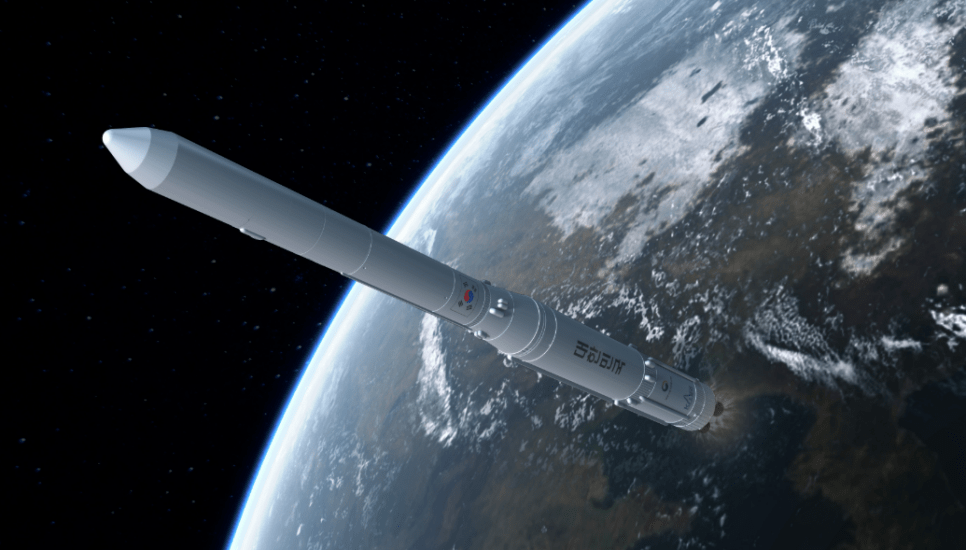
In Korea, the same shift is visible in policy language. KASA’s 2026 work plan emphasizes not just technology development, but commercialization, launch reliability, reusable launch vehicle development, and stronger private-sector participation. That is exactly what an industry transition looks like.
2. What SpaceX changed
SpaceX changed the economics of access to space.
According to SpaceX’s current published materials, Falcon 9 is listed at $74 million through 2026 and can carry 22,000–22,800 kg to low Earth orbit, which implies a headline cost in the rough range of about $3,200–$3,400 per kg depending on the payload assumption. Earlier NASA-cited analysis of Falcon 9 economics put the cost at around $2,720 per kg under prior pricing, illustrating the same structural point: launch costs fell dramatically compared with older systems.
That cost decline matters because cheaper launch expands what is economically possible.
Lower launch costs make more satellite deployments viable, support higher launch cadence, and create room for entirely new business models in communications, observation, analytics, and defense-linked applications. In other words, launch cost compression is not the whole industry, but it is what made the industry possible at scale.
3. The core of Korea’s space industry is downstream
For Korea, the most important part of the space industry may not be rockets themselves.
It is the downstream layer built on top of satellites and orbital infrastructure. That includes satellite data applications, ground station operations, satellite communications, Earth observation services, and data analytics platforms. Those are the areas where recurring commercial value is more likely to emerge, because the real monetization often happens after the satellite is already in orbit. This is also consistent with KASA’s policy emphasis on satellites, utilization, and industrial ecosystem expansion rather than launch vehicles alone.
That is why the long-term question for space is not just who launches.
It is who captures the data layer.
4. The government’s direction is changing too
Korea’s policy stance is shifting from research-heavy support toward industrial execution.
KASA’s 2026 budget was finalized at 1.1201 trillion won, up 16.1% from the previous year, marking the first time the agency has entered the 1 trillion won budget range. Public reporting and KASA’s own releases both stress that the increase is not just about expanding R&D for its own sake, but about broadening the base for private participation and moving toward more concrete project implementation.
That is an important distinction.
It suggests Korea is starting to move from the research phase of space development toward the industrialization phase.
5. The upcoming schedule matters
The near-term calendar is one of the reasons the sector is starting to feel more real.
KASA says the fifth Nuri launch remains on schedule, with microsatellite constellation satellites No. 2 through 6 as the primary payload and additional secondary CubeSats also in preparation. KASA has also framed 2026 as the year to improve launch reliability and deepen commercialization efforts.
Some of the other mission names in your draft, such as next-generation medium satellites and commercial launches by private players, fit the broader commercialization narrative. But the most clearly verifiable near-term public item from official Korean sources is the Nuri 5 launch and the deployment of microsatellites 2–6. So for a WordPress post, it is safer to lean on the broader point: the sector is moving from demonstration to commercialization.
6. In the end, the real business is data
This is the most important point.
The essence of the space industry is not the rocket. It is the data.
Once satellites are in orbit, the value chain expands into military intelligence, logistics optimization, energy monitoring, disaster response, insurance modeling, agriculture, and infrastructure management. That is where space starts to connect with real economies on Earth. It becomes less about spectacle and more about decision-making, efficiency, and strategic advantage.
That is why the most durable winners in space may not be the companies that simply launch hardware.
They may be the companies that turn orbital assets into usable data, software, and services.
 The Morning Calm Notebook
댓글 남기기