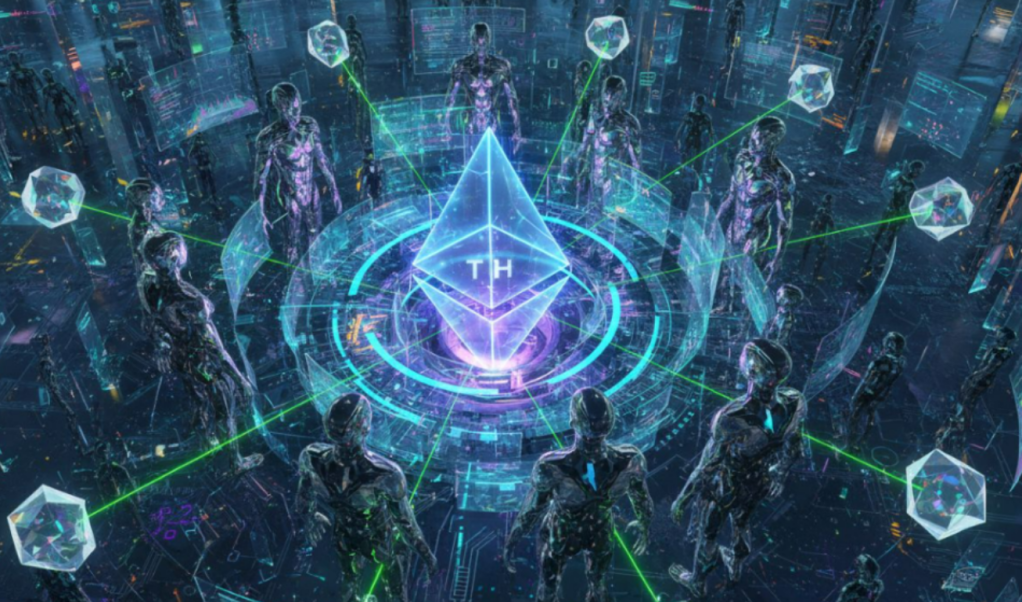
As AI agents become more capable, they are starting to look less like tools and more like economic actors.
They can buy data, pay for API access, outsource tasks to other agents, and eventually complete payments on their own. That is why many people are now talking about the arrival of the AI agent economy — a system in which AI does not just assist humans, but also participates directly in digital commerce.
1. The rise of the AI agent economy
We are moving toward a world where AI agents can act independently in the marketplace.
An AI agent may:
- purchase data,
- use paid APIs,
- outsource work to another agent,
- and make payments without human intervention.
In other words, AI is beginning to function as an economic participant, not just a software tool.
2. The role of the agent wallet
For this new economy to work, AI agents need a way to hold and move value.
That is where the agent wallet comes in.
Projects such as Coinbase Agent Wallet point to a future in which an AI agent can create a wallet, send payments, receive funds, and interact with on-chain services by itself. A wallet is no longer just for people. It can also become part of an autonomous machine workflow.
3. The infrastructure behind the agent economy
If AI agents are going to transact with each other, they need a shared infrastructure. That infrastructure is starting to take shape through emerging standards.
Some of the key building blocks include:
- Identity: ERC-8004
- Authentication: ERC-8128
- Payments: x402
- Contracts: ERC-8183
Together, these standards begin to form the foundations of an AI-to-AI transaction system.
4. Why ERC-8183 matters most
Among these technologies, ERC-8183 may be the most important.
Its significance comes from one simple idea: it allows one AI agent to hire another AI agent for work. In effect, it creates a framework for machine-to-machine outsourcing.
The structure is straightforward:
- Client — the agent requesting the work
- Provider — the agent performing the task
- Evaluator — the agent verifying the result
The transaction flow typically looks like this:
- A task is created
- Funds are placed in escrow
- The work is submitted
- The result is evaluated
- Payment is released
This is more than a payment system. It is the foundation of a potential AI labor marketplace.
5. The micropayment problem
One of the biggest challenges in the AI economy is that many transactions are extremely small.
For example, a single API call might cost only $0.001.
That may not sound like a problem until you compare it with traditional payment rails. A typical card fee can be around $0.30, which makes tiny machine-driven transactions economically impractical.
If AI agents are going to transact constantly and autonomously, the payment layer must support very small payments at very low cost.
6. Circle Nanopayments and batched settlement
This is where solutions such as Circle Nanopayments become relevant.
The idea is simple: instead of settling every single tiny transaction directly on-chain, thousands of small payments can be grouped off-chain and then settled together in a single blockchain transaction.
For example:
- 3,000 payments occur,
- but only 1 blockchain record is needed for final settlement.
This approach dramatically reduces cost while preserving the benefits of blockchain-based settlement.
7. What the future could look like
The long-term picture may look something like this:
AI agents
→ execute micro-transactions
→ pay using stablecoins
→ settle on Ethereum-based infrastructure
In that model, blockchain does not replace every layer of activity. Instead, it becomes the trust and settlement layer underneath a much larger machine economy.
8. Why Ethereum matters
Ethereum’s importance goes beyond speculation or token prices.
Its deeper role is that it provides programmable trust.
One useful way to think about it is this:
- Oil produces energy
- Ethereum produces trust
In that sense, ETH can be viewed as a kind of trust commodity — an asset that helps secure and coordinate a system where autonomous agents can transact without relying entirely on traditional intermediaries.
9. The market signals are already visible
The market is already showing signs that this transition is underway.
Recent data shows that USDC monthly transaction volume has surpassed $1.7 trillion, with year-over-year growth of 250%.
That kind of growth suggests that stablecoin-based payment infrastructure is no longer theoretical. It is becoming a serious foundation for internet-native commerce — and potentially for the AI agent economy as well.
 The Morning Calm Notebook
댓글 남기기