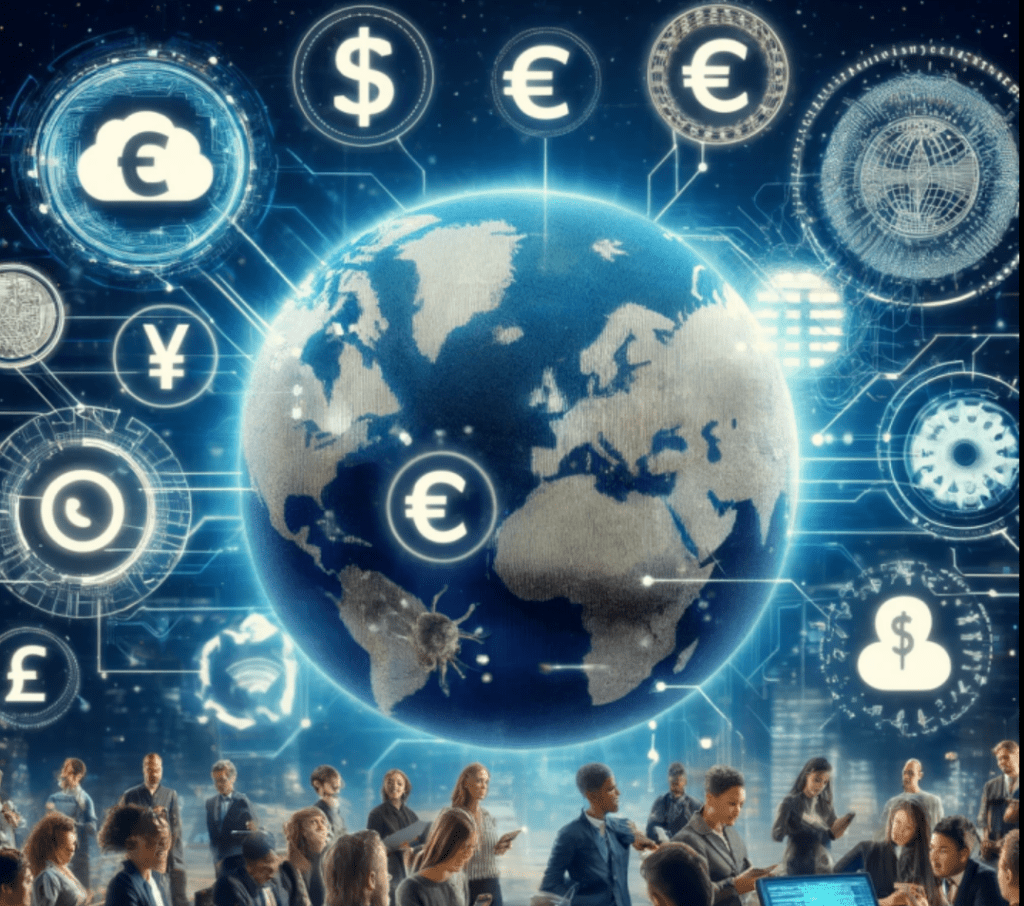
A major shift is beginning in digital payments.
For decades, payments were designed around human action. A person clicked a button, entered card details, confirmed a purchase, and completed the transaction. But that model may not define the future for much longer.
As AI agents become more capable, the real game change is this: the entity making the payment is starting to change. In the next phase of the digital economy, payments may no longer be initiated by people, but by software acting on their behalf. And once that happens, the entire payment industry — from wallets to platforms to fee structures — could be reshaped.
1. The game changer: the payer is changing
The most important shift is simple:
the payer is moving from humans to AI agents.
Today, a person clicks and pays.
In the future, an AI agent may decide, execute, and settle the payment on its own.
That changes the nature of commerce itself.
A self-driving car could pay for parking automatically. An advertising AI could place bids and settle payments in real time. An AI shopping assistant could scan prices across platforms and instantly purchase the cheapest option without waiting for human input.
In that world, payment is no longer an action. It becomes a background process.
2. Invisible payments are the next stage
The future of payments is likely to be increasingly invisible.
That means no click, API-based automation, and machine-to-machine transactions.
Instead of asking users to repeatedly confirm and complete transactions, payment systems will increasingly operate behind the scenes. The user may still set preferences and limits, but the execution itself will happen automatically.
In that sense, payment does not disappear financially.
It disappears from the user experience.
It becomes infrastructure rather than interface.
3. The wallet becomes the financial operating system
The role of the wallet is also changing.
In the past, the center of payment power was the card network, led by players such as Visa and Mastercard.
More recently, the focus shifted toward payment interfaces such as Naver Pay, Kakao Pay, and other user-facing fintech platforms.
But in the next phase, the real power may sit inside the digital wallet.
Why?
Because the wallet is evolving into a kind of financial operating system.
It can hold identity, assets, permissions, credentials, and eventually AI agents themselves. The wallet is no longer just a place to store value. It becomes the control layer that connects users, money, and autonomous software.
Whoever controls that layer may end up controlling much more than payments.
4. Traditional payment business models may start to break down
Many existing payment strategies are built around human psychology.
Points, cashback, discounts, and rewards all work because people are emotional, brand-sensitive, and often irrational in their spending behavior.
But AI is different.
An AI agent does not care about branding. It does not feel loyalty. It does not chase points for satisfaction. It does not respond to marketing in the same way a human does.
Its decision criteria are much simpler:
minimize fees, maximize speed, optimize execution.
That means many of the classic tools used by payment companies to attract and retain users could lose their effectiveness in an AI-driven environment.
Marketing does not disappear.
But more of it gets replaced by algorithmic selection.
5. The 30% platform fee model comes under pressure
One of the biggest structural consequences of AI-native payments may be pressure on the traditional platform toll model.
For years, major app ecosystems operated with fee-heavy structures, often built around centralized control of payments and distribution.
But open payment rails, stablecoins, and protocol-based settlement models could weaken that structure over time.
If payment moves onto open infrastructure, then the platform may no longer be able to extract the same level of rent simply by sitting in the middle.
That is why this shift matters beyond fintech.
It is also about platform power.
Payments may move from a centralized model to a more protocol-driven one, and that could reduce the control of legacy intermediaries.
6. Nanopayments could unlock the machine economy
Another major shift is the rise of nanopayments.
This means transactions at extremely small values — even down to $0.0001 or similar levels.
Why does that matter?
Because once payments become real-time, low-cost, and machine-driven, entirely new forms of economic activity become possible.
AI agents could pay each other for tiny services, data access, micro-computing tasks, or real-time digital resources. A machine could buy exactly one unit of processing power, one snippet of data, or one second of access.
That is the beginning of a true machine economy.
And without a low-friction payment layer, that economy cannot function.
7. Governments may enter the wallet era too
This transformation may not stop at the private sector.
Governments are also moving toward more digital forms of money, identity, and distribution infrastructure. Over time, public finance systems may also become more connected to digital wallets, whether through tokenized systems, digital public infrastructure, or forms of central bank-linked money.
That raises a much bigger possibility:
eventually, not just private money, but also parts of state money could flow through digital wallet systems.
If that happens, the wallet becomes even more important.
It would no longer be just a payment tool. It would become the main access point for financial participation itself.
8. What determines the winners
In the end, the winners in this new system will likely be the players that control three things:
the wallet, the infrastructure, and trust.
The most powerful position is not just owning a payment app.
It is owning the layer that holds a user’s identity and assets, while also serving as the environment where AI agents can act, transact, and coordinate.
That is where platform power may be rebuilt in the AI era.
The next battle in finance may not be about who has the biggest app.
It may be about who controls the operating system for autonomous commerce.
 The Morning Calm Notebook
댓글 남기기