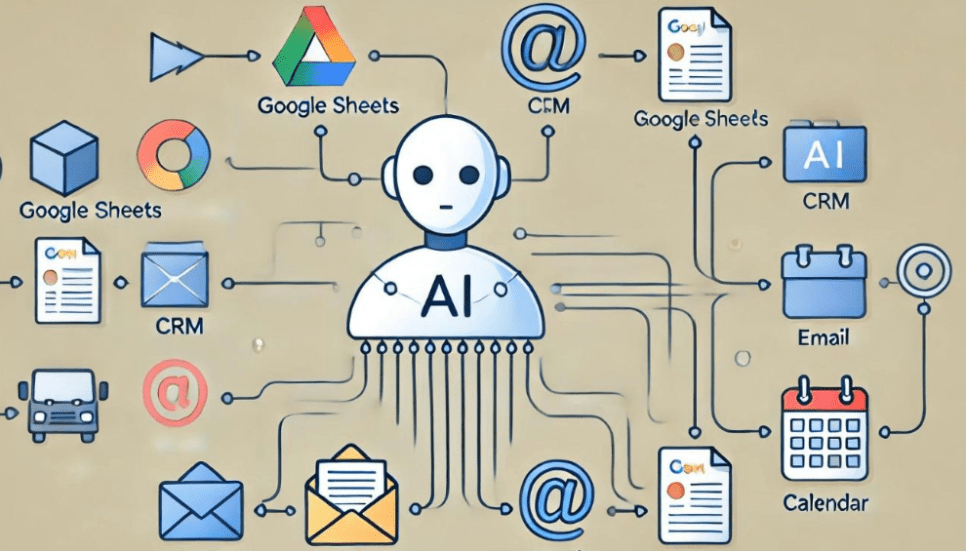
For the past few years, we’ve used AI mostly to chat, write emails, or generate pretty images. But that era of “passive AI” is coming to an end. We are now entering the AI Agent Era.
The difference? Agentic AI doesn’t just talk; it acts. This shift from digital intelligence to physical execution is transforming everything from our smartphones to massive industrial factories. Here is a deep dive into how AI is finally getting a “body” and taking charge of the real world.
1. The Rise of “Physical AI”
The most exciting frontier of this movement is Physical AI. This refers to intelligence that operates directly in our world through machines.
- The Reality Check: This isn’t a futuristic dream. Amazon is already running 750,000 warehouse robots, and DHL has over 8,500 in operation.
- The Scale Shift: We are moving from a world where a factory has “a few robots” to one where a single facility manages tens of thousands of autonomous units.
2. The New Tech Stack: Who Wins the Robotics Race?
Just like the smartphone market, the robotics industry is organizing into a multi-layered “stack.”
| Layer | Description | The Value Play |
| L5: RaaS | Robotics-as-a-Service | The end-user business model. |
| L4: Platform | Robot Operating Systems | The “iOS/Android” of robots. |
| L3: Intelligence | AI Brain/Foundation Models | Where the “thinking” happens. |
| L2: Connectivity | 5G/6G & Cloud | The nervous system. |
| L1: Hardware | The Physical Body | Increasingly standardized/competitive. |
The Strategy: While hardware is essential, the Platform (L4) and AI (L3) layers are where the long-term profits usually sit.
3. Geopolitics: China’s Hardware vs. America’s Software
Right now, we are seeing a fascinating divide in the global supply chain:
- The Hardware King: China currently controls 85–90% of global humanoid robot shipments. Giants like Unitree and UBTECH benefit from an incredible manufacturing ecosystem.
- The Software King: Most of these robots—even the Chinese ones—often run on U.S. infrastructure. NVIDIA is the dominant force here with its Jetson modules, Omniverse simulations, and GR00T foundation models.
4. GPU-as-a-Service: The New “Utility”
As AI agents require massive computing power, a new business model is emerging: GPU-as-a-Service. Think of it like the early days of mobile networks. Telecom giants (like SK Telecom, KDDI, and Deutsche Telekom) are now building “AI Infrastructure” to provide the distributed computing power these agents need to function. Projections suggest this market could explode from $20 million to over $21 billion in the near future.
5. What Can an “Agent” Actually Do?
Unlike a standard chatbot, an AI Agent can handle complex, multi-step workflows autonomously:
- Execute applications and manage your calendar.
- Make online payments and book your entire holiday trip.
- Manage industrial workflows without human intervention.
6. The Next Generation of Devices
We are moving beyond the screen. The “interface” for these agents will evolve into:
- AI-Native Smartphones (like the Galaxy S-series AI).
- Smart AR Glasses that see what you see.
- Humanoid Robots that act as physical assistants.
The Big Picture: The Evolution of the AI Economy
The path is clear:
- AI Models (Intelligence)
- Agentic AI (Capability)
- Robotics (Physicality)
- Real-world Industry Transformation (Impact)
AI is moving out of the cloud and into our streets, factories, and homes. The “Agent Era” is just beginning, and it’s going to be a wild ride.
 The Morning Calm Notebook
댓글 남기기