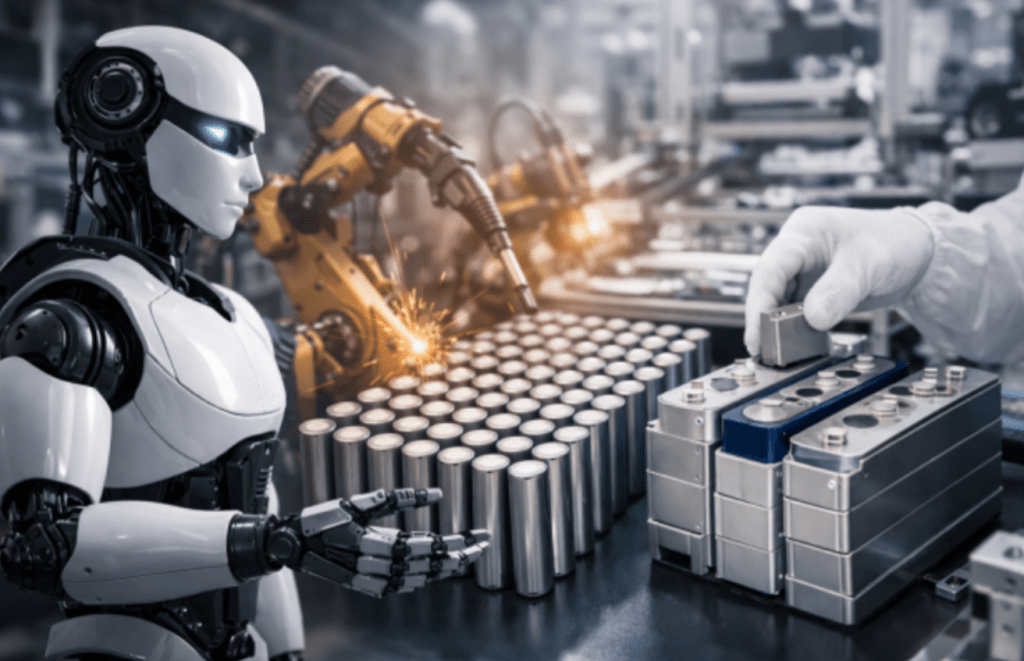
The battery industry is no longer waiting for a simple recovery cycle. Instead, it is quietly undergoing a fundamental restructuring. While the world was focused on the “EV slowdown,” the fog was hiding a significant shift in how energy demand is being organized.
2026 isn’t about an explosive return to the old ways; it’s about a strategic rebalancing across new frontiers.
1. The Great Thaw: From Freeze to Flow
The “investment freeze” of the past few years is finally ending. Projects that were paused—factories delayed, equipment orders postponed—are beginning to move forward again. However, this isn’t the aggressive, reckless expansion of the past. It is a calculated restart, focused on efficiency rather than just volume.
2. The New Engine: ESS Over EVs
If you want to find the true growth engine of 2026, don’t look at the driveway—look at the power grid. Energy Storage Systems (ESS) are becoming the primary narrative.
- The Surge: ESS capacity is expected to more than double year-over-year, particularly in North America.
- The Drivers: This expansion is fueled by the desperate need for grid stability and the massive power demands of AI data centers. The industry is evolving from an “EV-only” story into a multi-sector energy platform.
3. Robotics: The High-Margin Frontier
A new, fascinating demand source is emerging: Humanoid Robots. While the total volume is currently smaller than EVs, the economics are vastly different. Robots operate under a high-cycle environment (1,400+ charges per year), leading to much faster replacement cycles.
“Because battery costs represent a small fraction of a robot’s total system cost, this sector becomes the perfect playground for premium chemistries like solid-state and high-nickel materials.”
4. Recycling: The Quiet Structural Winner
As battery usage diversifies and cycle frequency increases (thanks to ESS and Robotics), recycling moves from a side business to a core ecosystem layer. More cycles mean faster degradation, which accelerates the supply of recyclable “black mass.” This creates a self-sustaining loop that eases critical mineral constraints and stabilizes the supply chain.
The Final Takeaway: A Multi-Demand Ecosystem
By 2026, the battery industry will have shed its singular dependence on the automotive market. We are entering an era of a “Multi-Demand System”:
- EVs: Steady, moderated growth.
- ESS: Rapid structural expansion.
- Robotics: A high-cycle, high-margin niche.
- Recycling: A stabilizer for the entire supply chain.
The fog is lifting to reveal an industry that is more stable, more diversified, and ultimately, more profitable. We are no longer just building batteries for cars; we are building the infrastructure for a physical AI world.
 The Morning Calm Notebook
댓글 남기기