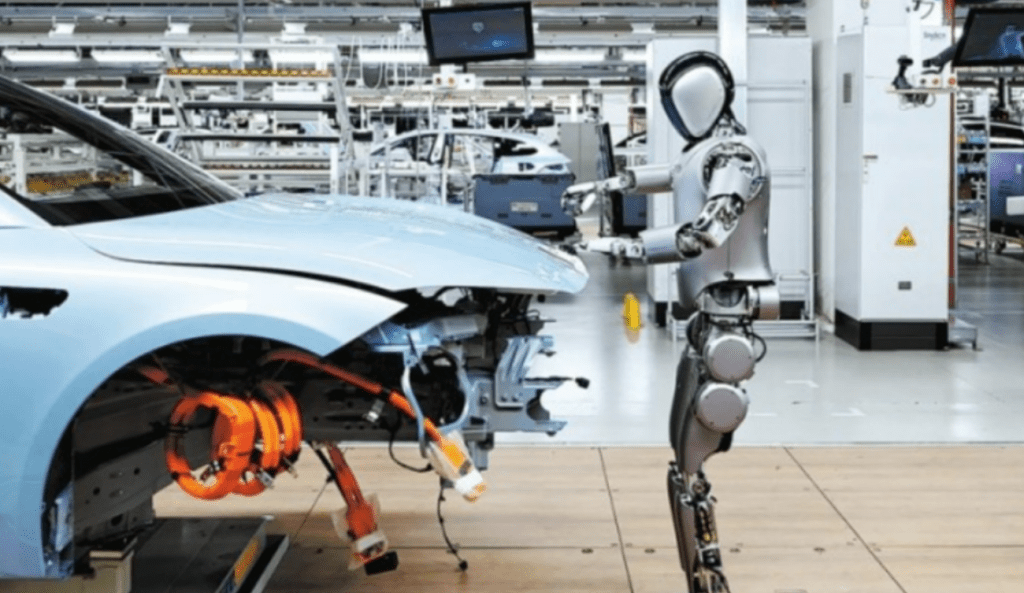
In the traditional investment world, Hyundai Motor is judged by vehicle margins and quarterly unit sales. But as we navigate the complexities of 2026, a new narrative is emerging from the fog. We are entering the era of Physical AI—where intelligence moves from screens into the real world.
In this shift, Hyundai is no longer just a carmaker; it is a Mobility + Robotics platform with a massive embedded option on the future of labor and movement.
1. From Intelligence to Action: Why Cars Matter
AI has evolved from Perception (seeing) to Generation (writing). The next stage is Physical Action. Cars are essentially the first large-scale “robots” we’ve integrated into our lives. Hyundai sits at a unique intersection because it possesses:
- Manufacturing Scale: The ability to build complex machines at millions of units.
- Real-World Safety Constraints: Experience in high-stakes environments where “good enough” isn’t an option.
- Embedded Computing: Moving toward Software-Defined Vehicles (SDVs) that act as mobile data centers.
2. Boston Dynamics: The Valuation “Call Option”
The market is starting to view Boston Dynamics not as a lab project, but as a future platform. As humanoid robots like Atlas move toward industrial deployment, the conversation shifts from “can it walk?” to “what is the payback period?” In markets like the U.S., where industrial wages are high, a robot that can operate 24/7 becomes a simple spreadsheet decision.
“When the annual operating cost of a humanoid falls below a human salary, adoption isn’t just a bet—it’s a certainty.”
3. The Autonomy Trigger: SDV and Beyond
The second layer of Hyundai’s re-rating comes from its SDV (Software-Defined Vehicle) roadmap. If Hyundai can demonstrate clear progress from Level 3 to Level 4 autonomy and successful commercial pilots for Robotaxis, it gains a “double re-rating”:
- Robotics Optionality (The potential of Boston Dynamics)
- Autonomous Credibility (The future of mobility services)
While Chinese manufacturers are pushing costs lower, geopolitical frictions and data security concerns create a “protected lane” for non-Chinese ecosystems like Hyundai to lead in global markets.
The Final Takeaway: Cash Flow + Optionality
In 2026, Hyundai’s base business (EVs and ICE vehicles) provides the stable cash flow, while its Physical AI ventures provide the high-upside optionality. Markets love this combination. If the path toward robotics commercialization or autonomous execution becomes even slightly clearer, Hyundai will move out of the “Auto Cycle” valuation fog and into the clear light of a Physical AI Platform valuation.
We aren’t just watching a car company anymore; we are watching a leader in the automation of the physical world.
 The Morning Calm Notebook
댓글 남기기