For decades, the field of Alzheimer’s research was a landscape of broken promises and failed trials. It was a “no-treatment” zone. But as we move through 2026, the fog is finally lifting. We are no longer asking if we can treat Alzheimer’s; we are now building the multi-layered stack of how we treat it at scale.
Surprisingly, the road to the global market for these breakthroughs increasingly runs through South Korea.
1. The First Wave: A Landmark with Limits
The arrival of anti-amyloid antibodies like Leqembi was a historic proof of concept. For the first time, we saw a clinical decline slowed by nearly 27%. However, the first generation is “operationally heavy.” The risks of brain swelling (ARIA) and the constant need for MRI monitoring mean these drugs aren’t yet ready for the mass market.
The industry’s focus is now shifting from “Does it work?” to “How do we make it safer and more deployable?”
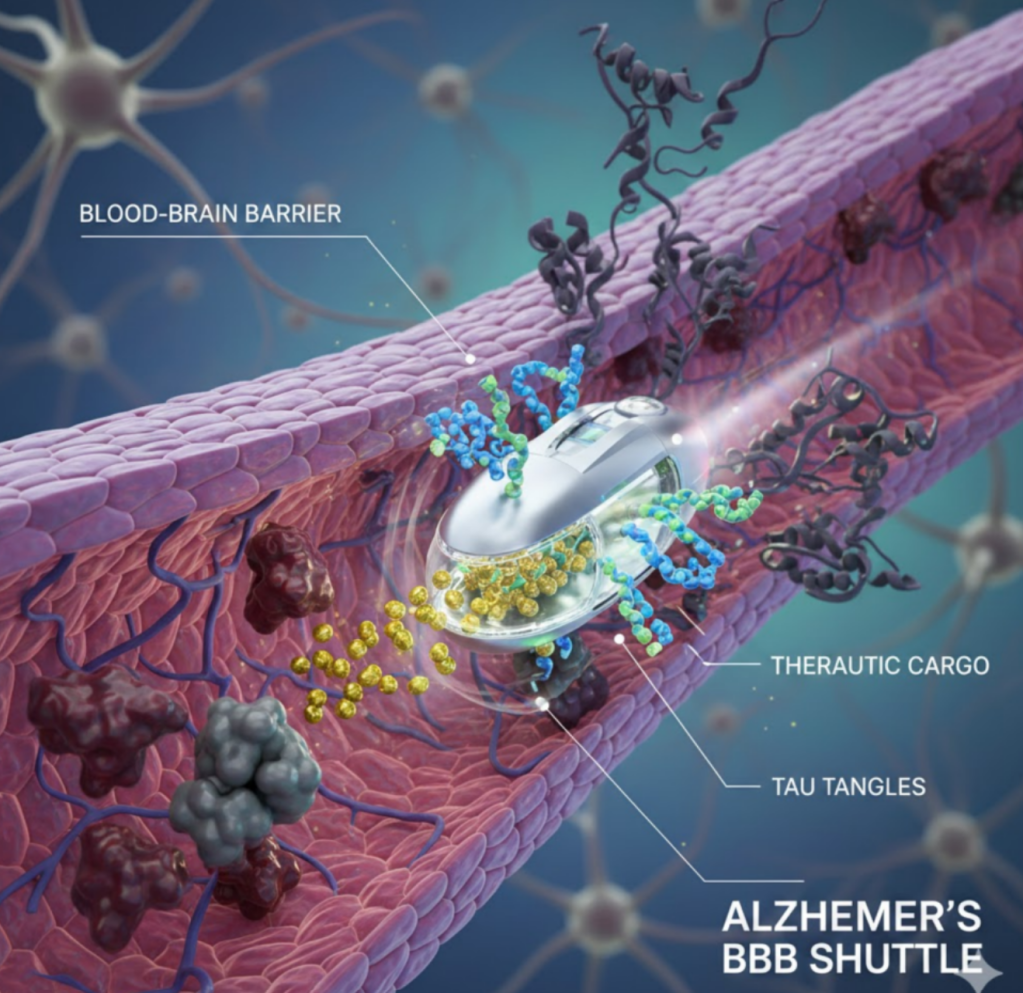
2. The Bridge: BBB Shuttles and Korea’s ABL Bio
The most critical bottleneck in brain medicine is the Blood-Brain Barrier (BBB)—the brain’s security gate. To make treatments safer, we need to get them across this gate more efficiently. This is where Korea’s ABL Bio has emerged as a global player. Their Grabody-B platform acts as a “molecular key” to shuttle drugs into the brain.
- The Market Signal: Massive licensing deals with giants like GSK (up to £2.14B) and Eli Lilly (up to $2.6B) prove that the market no longer views BBB delivery as a niche feature—it is the platform-level foundation for the next generation of neurology.
3. Beyond Amyloid: The Full Treatment Stack
We are learning that Alzheimer’s is not just about one protein. The roadmap is evolving into a sophisticated, multi-layer strategy:
- The Tau Layer: If Amyloid is the trigger, Tau is the accelerator of neurodegeneration. The field is moving toward suppressing Tau production to halt actual progression.
- The Genetic Layer (APOE4): Instead of just cleaning up plaques, researchers are looking at gene therapy to change the “risk architecture” of the brain itself.
- The Neuroinflammation Layer: Chronic inflammation driven by microglia (the brain’s immune cells) is the silent driver of damage. The future belongs to Combination Therapy: Amyloid Control + Inflammation Modulation + Tau Strategy.
The Final Takeaway: The Stack is Finally Forming
We are not at “the cure” yet, but for the first time in history, the roadmap is clear. We have moved from simple clearance to a sophisticated system of delivery, progression suppression, and genetic risk management.
Korea’s role in this—providing the “shuttle” technology that makes these drugs mass-market viable—positions its biotech sector as a vital infrastructure provider for the global pharmaceutical industry. The fog is lifting, and what lies beneath is a structured, durable path toward treating one of humanity’s greatest challenges.
 The Morning Calm Notebook
댓글 남기기