For decades, silicon has been the undisputed king of solar energy. But a new contender is emerging from the labs that could fundamentally rewrite the rules of how—and where—we generate electricity.
Enter Perovskite.
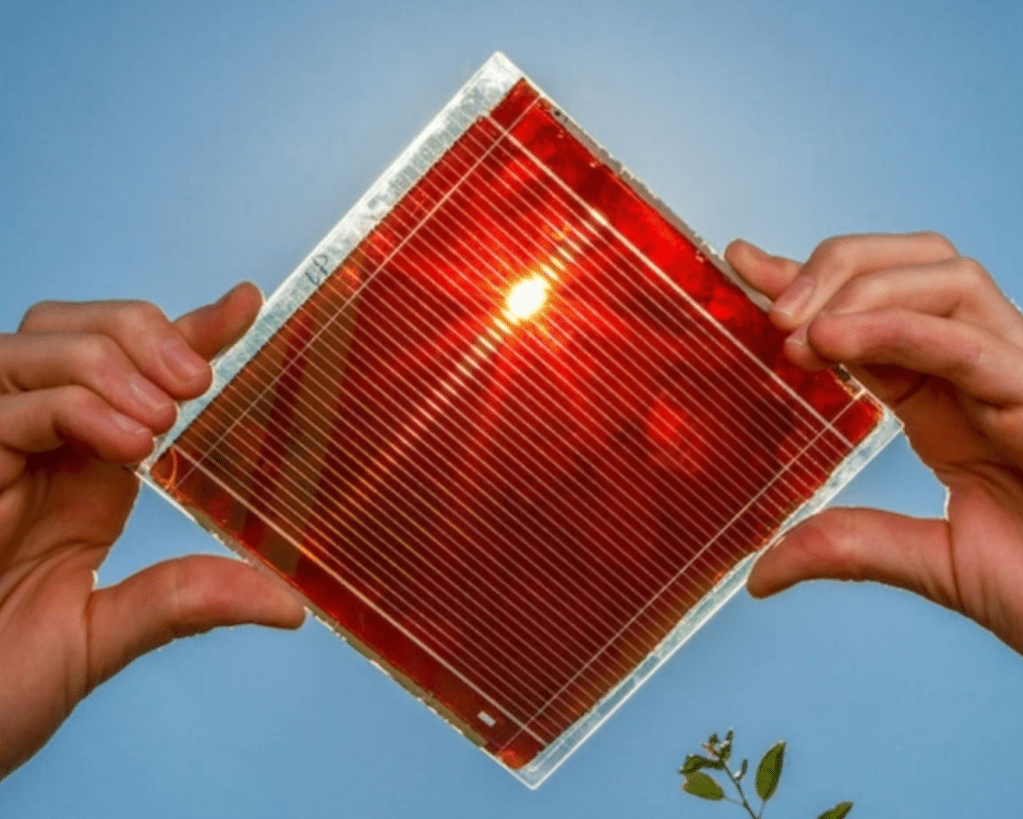
It’s lighter, flexible, and potentially far cheaper to produce, all while matching the efficiency of the silicon panels we’ve used for half a century.
1. The Efficiency Breakout
Perovskite cells have already hit efficiency levels of around 26%, breathing down the neck of commercial silicon’s best performance. But the real story isn’t just the numbers—it’s the versatility. Unlike rigid silicon, perovskites are:
- Ultralight & Flexible: They can bend without breaking.
- Semi-Transparent: They can let light through while capturing energy.
- Printable: They can be manufactured using processes similar to newspaper printing.
2. Turning Buildings into Power Plants
The rigidity of silicon limits solar to flat rooftops and massive desert farms. Perovskite changes the geography of energy. Because these cells can be made transparent, we are looking at a future of Building-Integrated Photovoltaics (BIPV).
Imagine:
- Solar Windows: Skyscraper glass that powers the AC inside.
- Curved Surfaces: Solar-integrated car roofs and drone wings.
- Urban Infrastructure: Every bus stop and sound barrier becoming a mini-generator.
3. The Manufacturing Revolution: From Factories to Printers
Silicon fabrication is a complex, high-heat, capital-intensive process. Perovskites, however, can be “printed” onto substrates. This shift suggests a massive drop in Capital Expenditure (CapEx). Lower production costs and simpler supply chains could drive the price of solar energy even lower than today’s record bottoms.
4. Why It Works: The Science of “Tunability”
What makes Perovskite a “miracle material”? It boils down to Tunable Bandgaps. Engineers can chemically adjust the material to catch specific parts of the light spectrum.
- Strong light absorption efficiency.
- Long charge carrier diffusion (energy moves through the material easily).
- Superior performance in low-light or indoor conditions.
5. The Final Hurdles: Durability and Scale
If Perovskite is so great, why isn’t it on every roof yet? Two major challenges remain:
- Stability: Silicon panels last 25+ years. Perovskites are currently sensitive to moisture, heat, and UV oxygen degradation. They need to prove they can survive a decade of hailstorms and heatwaves.
- Scaling: Achieving 26% efficiency in a small lab “postage stamp” is one thing; maintaining that across a 2-meter wide industrial panel is another.
The Final Takeaway
Perovskite isn’t just an incremental upgrade; it’s a paradigm shift. If we solve the durability puzzle, solar power moves out of dedicated “farms” and into the very fabric of our cities—our windows, our cars, and our clothing.
We are moving from a world where we install solar to a world where we integrate solar into everything we build.
 The Morning Calm Notebook
댓글 남기기