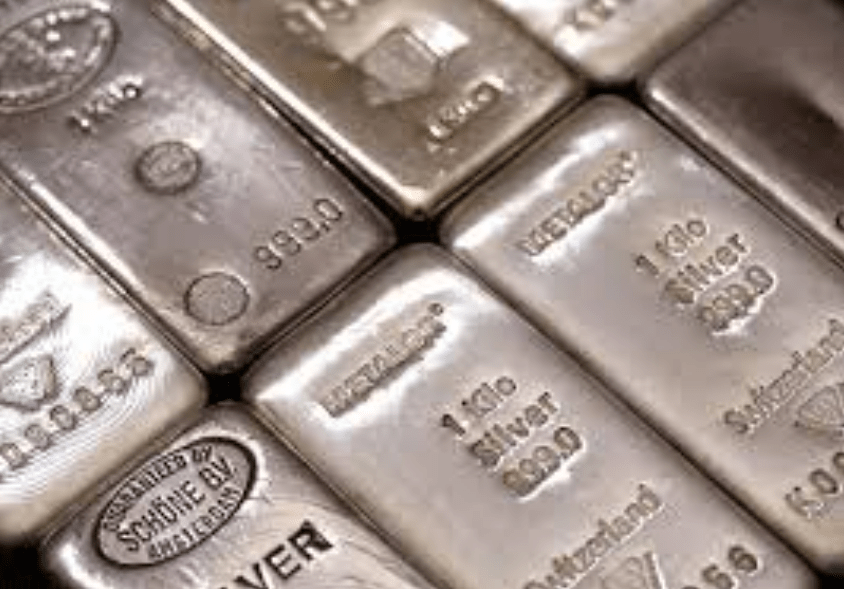
Silver has long been dismissed as gold’s volatile, restless sibling—a metal caught somewhere between “store of value” and “speculative play.”
But look under the hood of current price dynamics, and you’ll find something far more profound. Silver is no longer just a precious metal; it is evolving into a strategic industrial asset characterized by a massive, structural supply-demand mismatch.
1. The Supply Trap: Why Miners Can’t Just “Dig More”
The biggest misconception about silver is that higher prices will lead to a flood of new supply. They won’t.
Silver’s supply structure is fundamentally rigid because roughly 60% of global production is a byproduct of mining for other metals like copper, zinc, and gold.
- Inelasticity: If silver prices skyrocket, a copper miner isn’t going to double their entire operation just to catch the silver premium.
- The Lead Time: Primary silver mines are rare. From discovery to the first ounce of production, the cycle now takes over a decade.
- The Deficit: We saw a cumulative deficit of ~820 million ounces between 2021 and 2025. Moving into 2026, we are looking at structural annual shortfalls of 150–200 million ounces.
This isn’t a temporary dip; it’s a dry well.
2. A Demand Supercycle: Solar, AI, and EVs
Silver demand is no longer driven by jewelry or silverware. Today, over 60% of demand is industrial, and that share is accelerating due to three unstoppable pillars:
① The Solar Surge
Newer, high-efficiency solar technologies (TOPCon and HJT) are incredibly silver-hungry, requiring 20–50% more silver per panel than older tech. Even as engineers try to “thrift” (use less metal), the sheer scale of global solar deployment is winning the race.
② The AI Infrastructure Backbone
Silver is the most electrically conductive metal on Earth. It is non-negotiable for the GPUs, power distribution units, and cooling systems that keep AI data centers running. As AI scales, silver demand scales in a 1:1 ratio.
③ The Electrification of Transport
An internal combustion engine uses about 15–28g of silver. An Electric Vehicle (EV) requires 25–50g. Between autonomous sensors and massive battery management systems, the future of transit is paved in silver.
3. Geopolitics and the “Critical Mineral” Shift
The world is waking up to silver’s scarcity.
- Policy: The United States has officially designated silver as a critical mineral. * Protectionism: China has implemented export licensing, tightening the grip on global flow.
- The Price Gap: Physical silver in Shanghai has recently traded at premiums exceeding $10/oz over COMEX futures. This isn’t paper speculation—it’s a desperate scramble for physical bars.
4. Why Margin Hikes Failed to Cool the Market
In an attempt to curb volatility, the CME Group recently hiked margin requirements for silver futures. Usually, this forces prices down. This time? It backfired.
Because the demand is driven by physical necessity rather than “paper” bets, the margin hikes simply forced leveraged shorts to cover, intensifying the squeeze. When the world needs the metal for its factories, a change in trading rules won’t stop the rally.
5. The Strategy: Following the Profits
In this environment, silver offers a unique asymmetric upside. The winners won’t just be the metal holders, but the producers with high-leverage exposure.
- Primary Producers: Their margins expand exponentially as prices rise.
- Byproduct Giants (The Windfall Play): Companies that recover silver during zinc or copper smelting—like Korea Zinc—are sitting on a goldmine (pun intended).
Case Study: Korea Zinc
Korea Zinc is a global powerhouse in this space, handling roughly 5.7% of global silver supply (~2,000 tons annually). With silver revenue projected to hit KRW 7 trillion by 2026, they represent a strategic way to play the silver supercycle without the volatility of pure-play juniors.
The Bottom Line
Silver is the intersection of the Energy Transition, AI Infrastructure, and Geopolitics. With supply remaining rigid and demand becoming increasingly “inelastic” (tech companies must buy it regardless of price), silver is shifting from a “trade” to a “must-own” strategic asset. For the long-term allocator, the upside isn’t just possible—it looks structural.
 The Morning Calm Notebook
댓글 남기기