China leads the world in scale, capital deployment, and the sheer velocity of iteration. In the race for humanoid robotics, they’ve already showcased impressive prototypes that look and move like the future.
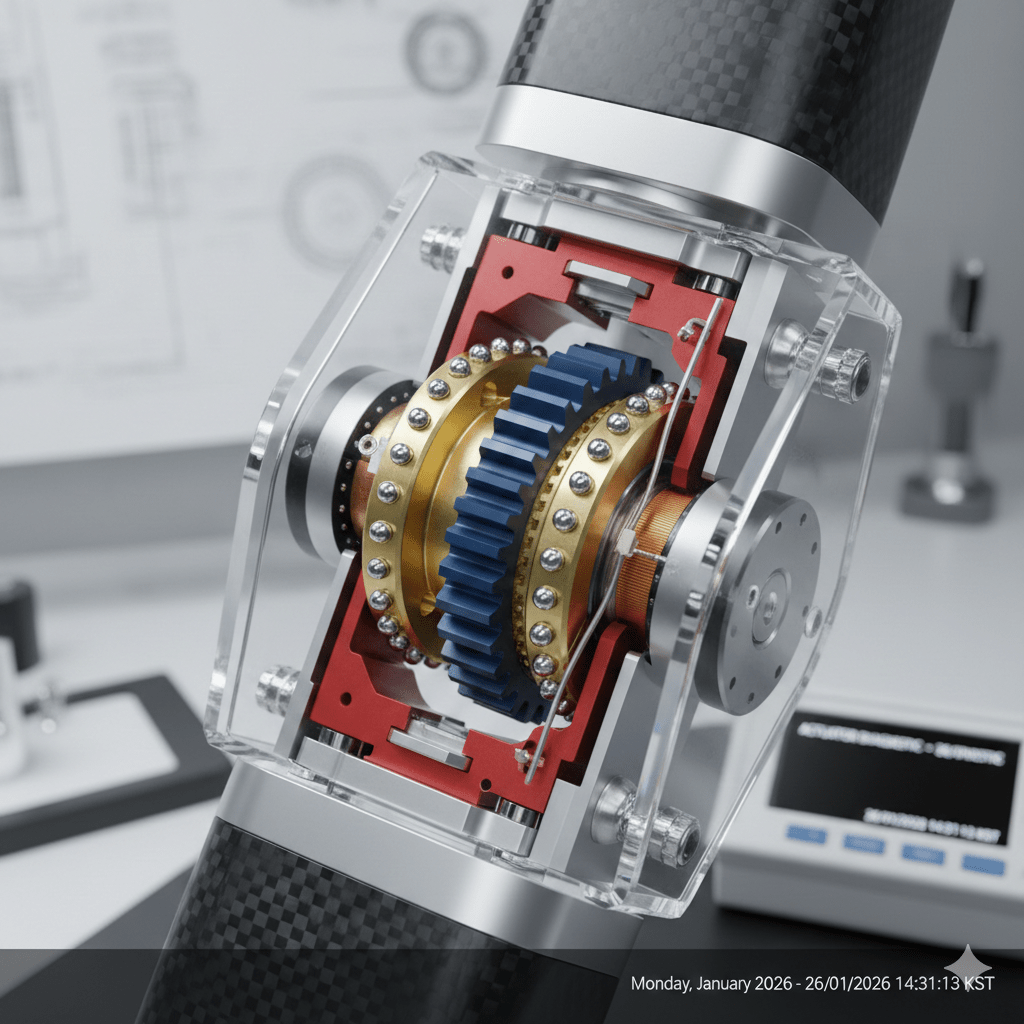
But beneath the sleek casing of these “demo” robots lies a stubborn reality: The Actuator Bottleneck.
While China has closed the gap in AI and software at breakneck speed, high-performance actuators remain a formidable barrier. This isn’t a lack of funding—it’s a fundamental clash between the digital world of code and the physical world of high-precision manufacturing.
1. Physics Doesn’t Care About Your Compute Power
In AI, you can solve problems by adding data, scaling GPUs, or tweaking algorithms. Actuators don’t work that way. The bottleneck here is a complex intersection of:
- Reducer precision
- Motor density
- Thermal management
- Fatigue and vibration resistance
These are governed by the laws of physics and decades of “tribal knowledge” in metallurgy. No amount of GPU scaling can shortcut the learning curve of metal fatigue.
2. The Logarithmic Growth of Quality
China has poured billions into domestic components, yet the performance gap persists. Why? Because actuator quality improves logarithmically with time, not linearly with capital.
The most critical hurdles—cumulative error in gear teeth, heat-treatment consistency, and long-cycle durability—cannot be brute-forced. You can’t buy “experience” in how a gear will behave after 10,000 hours of continuous stress; you have to observe it.
3. The “Demo Trap”: Scaling vs. Prototyping
China is the world champion of the “Demo.” They can produce high-quality prototypes and small pilot batches faster than anyone. However, the real wall appears at mass production.
The typical trajectory we see is:
- Excellent demo units.
- Successful small-batch trials.
- Scale-up → Yield collapse.
While the software performs flawlessly and the AI scales, the mechanical components fail to maintain consistency at volume. This creates a structural scarcity of reliable parts.
4. A Structural Investment Opportunity
This constraint isn’t just a technical hurdle; it’s a roadmap for investors. Because this bottleneck is physical and experience-driven, it won’t disappear overnight. This creates a “long-lived window” of opportunity in three key areas:
- Established Non-Chinese Suppliers: Companies (like Japan’s Harmonic Drive) with proven mass-production yields and durability track records will remain the “gold standard” as the industry scales.
- Subsystem Integrators: Firms that can successfully integrate the motor, reducer, and control systems into certified, repeatable modules will capture massive value.
- Testing & Materials Specialists: As complexity rises, the demand for advanced validation, specialty materials, and process know-how will skyrocket.
The Bottom Line
The humanoid robotics timeline won’t be gated by AI intelligence or vision models. It will be gated by how fast reliable motion can be industrialized.
China will eventually close this gap, but we are looking at a timeline measured in decades, not quarters. In an era of “instant” software disruption, the actuator industry is a reminder that some things still reward patience over speed.
For those looking at the value chain, the real strategic leverage isn’t in the brain of the robot—it’s in the joints.
 The Morning Calm Notebook
댓글 남기기