In the world of humanoid robotics, actuators are often described as the “final boss.” They are the most defensible bottleneck, protected by the laws of physics and decades of manufacturing “tribal knowledge.”
But in a tech world obsessed with disruption, people keep asking: Could this barrier collapse overnight? Is there a “GPT moment” coming for robot joints?
The short answer is: No. But the nuanced answer explains why this is actually the most exciting part of the robotics investment thesis.
1. What Won’t Work: The Digital Illusion
First, let’s clear the air. You cannot solve a hardware bottleneck with a software solution. The actuator barrier will not be broken by:
- Larger AI models or better data.
- Faster control algorithms.
- High-fidelity simulations.
These tools are great at optimizing how a robot moves, but they don’t change the reality of friction, heat, fatigue, and material deformation. Actuators fail in the physical world, where no amount of “compute” can stop metal from wearing down after a million cycles.
2. The Real Disruption Scenarios (And Why They’re Hard)
For a structural leap to happen, we’d need something more radical than a better gear design. We’d need a shift in one of these three areas:
A. The Material Revolution
A breakthrough would require a new class of alloys or meta-materials that offer extreme fatigue resistance and minimal thermal expansion. The problem? You can’t just “discover” these in a lab. You have to validate them over millions of real-world cycles. Incumbents like Harmonic Drive win because they have 30 years of failure data. New materials don’t have that trust.
B. Architectural Substitution
Could we eliminate the reducer entirely? Or move to distributed actuation? While theoretically possible, most alternatives today trade away the very things humanoids need: precision and durability. In robotics, a “new” architecture that is only 90% as reliable is effectively useless.
C. The Manufacturing Paradigm Shift
This is the most realistic path. If a company achieves fully automated, high-yield precision machining with zero-drift heat treatment, the “experience barrier” starts to shrink. But make no mistake: this isn’t a “startup moment.” It’s a slow, capital-intensive industrial revolution.
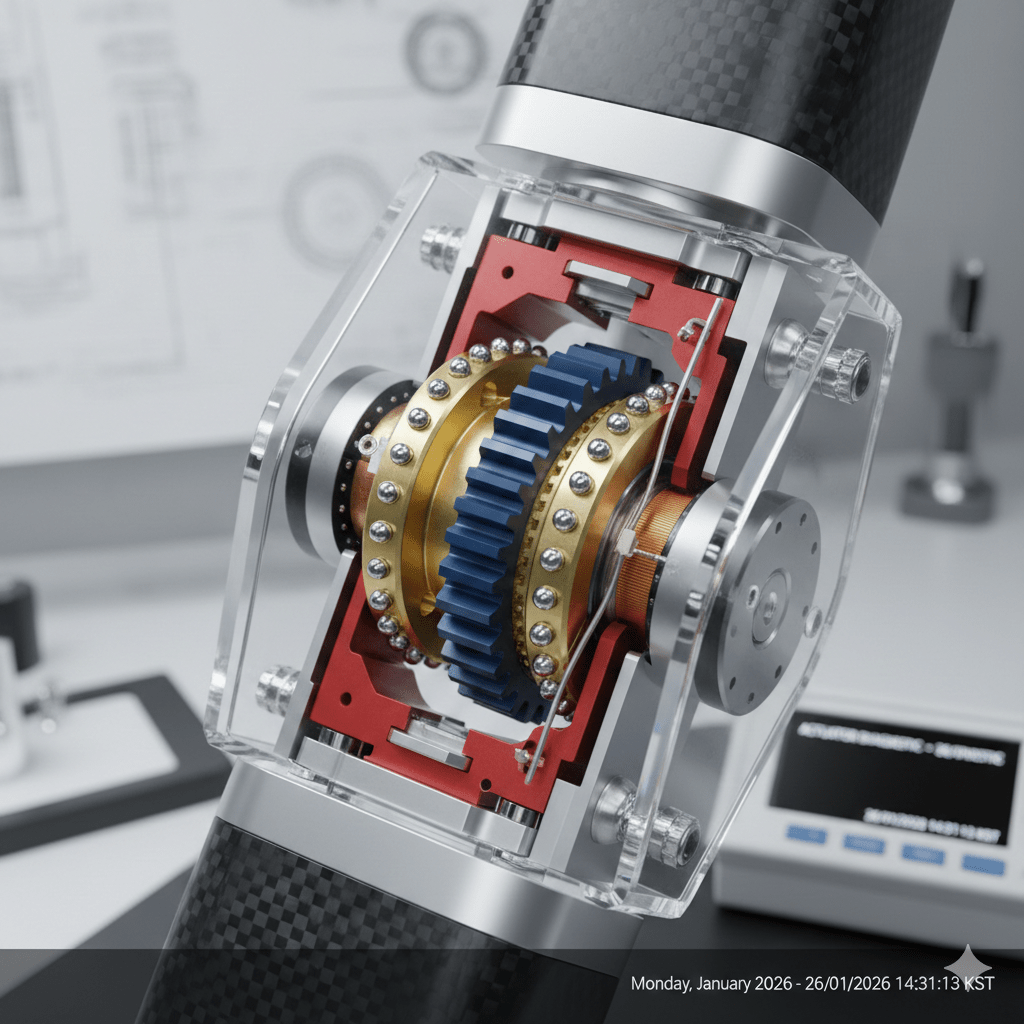
3. Why This “Wall” Is Your Best Friend
In software, a barrier breaking usually means your moat disappears instantly. In actuators, the opposite is true. The dominance of top-tier manufacturers is reinforced by three things:
- Physics: It can’t be “optimized away” by code.
- Experience Curves: Measured in decades, not quarters.
- Reliability Economics: A failed joint doesn’t just crash a program; it destroys a $100,000 machine and creates safety risks.
This makes customers extremely conservative. They don’t want the “new, unproven” actuator; they want the one that has been spinning for 10 years without a glitch.
4. What to Watch (Forget the Headlines)
Stop looking for “breakthrough” press releases. If you want to know if the barrier is shifting, look for these boring signals:
- Gradual yield improvements at scale.
- Consistent reduction in defect rates over 3–5 years.
- Long-duration field data (not 2-minute demo videos).
Final Thought: The Value of Slow Erosion
The actuator bottleneck is not a temporary bug in the robotics roadmap. It is a structural moat. Unlike software barriers that shatter suddenly, hardware moats erode slowly. For investors and strategic players, this “slow erosion” is a gift. It creates a long, predictable window of supply scarcity, pricing power, and strategic leverage.
In the race to build the future, the “brain” might get all the headlines, but the “joints” will capture the value.
 The Morning Calm Notebook
댓글 남기기