Why Power Availability, Not Computing, is the New Bottleneck of AI
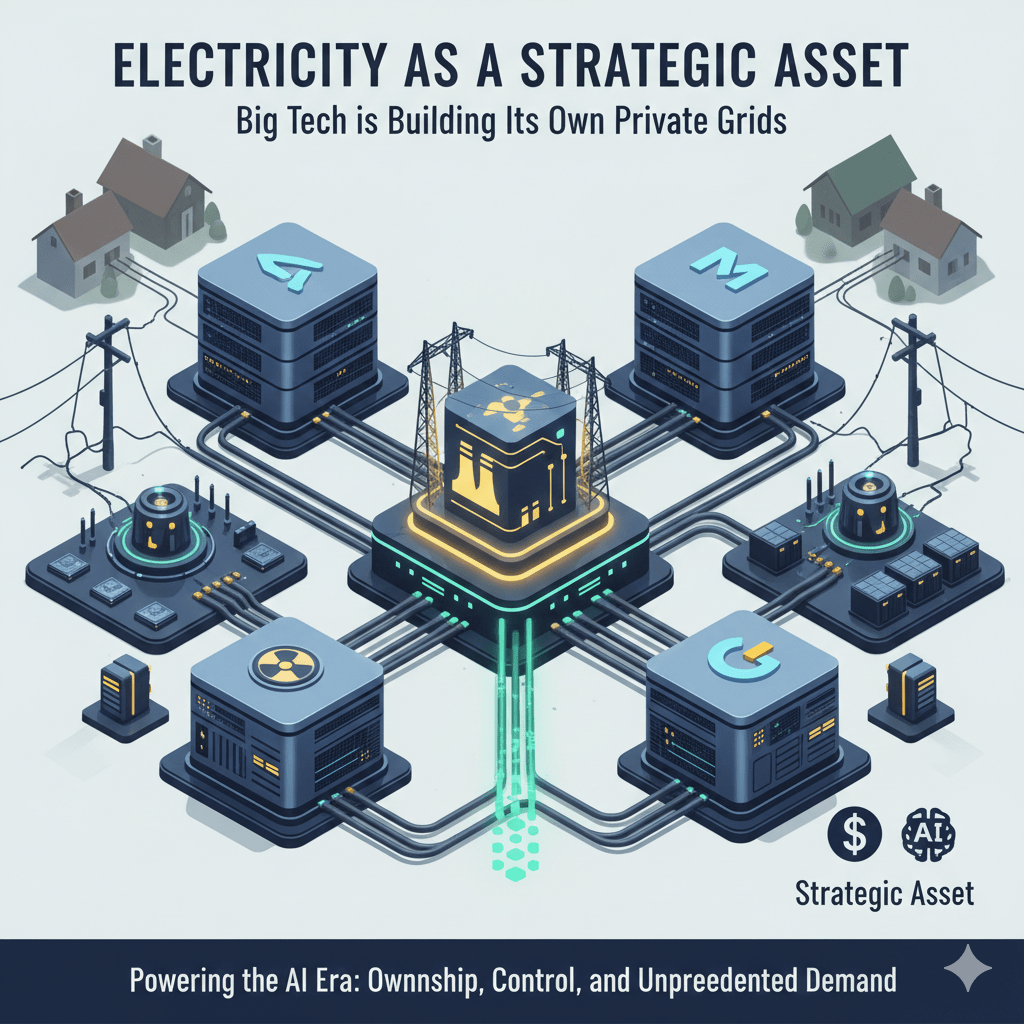
The U.S. power market is entering its most aggressive demand cycle of the 21st century. But the real story isn’t just about rising consumption—it’s about control. In the AI era, electricity is being transformed from a public utility into a private, strategic corporate asset.
1. The Grid Bottleneck: A Physical Reality
We are witnessing a massive disconnect between technological speed and physical infrastructure.
- Demand vs. Infrastructure: While AI hardware refreshes every year, the average wait time for grid interconnection is now roughly 4 years.
- The Transformer Crisis: Lead times for critical transformers have exploded from weeks to 3–6 years.
- The Texas Signal: In the ERCOT market, large-load interconnection requests surged 300% in a single year, with 70% of that growth driven solely by data centers.
2. Physical AI and the Need for 24/7 Baseload
The rise of “Physical AI”—autonomous driving, robotics, and smart manufacturing—has changed the requirement for power.
- Zero Tolerance for Instability: These systems require near-100% uptime and absolute voltage stability.
- Density Explosion: Power density has leapt from 10 kW per rack to over 100 kW per rack.
- Uptime as a Product: Electricity is no longer a “cheap input”; it now directly determines the reliability and competitiveness of AI systems.
3. The “Beneficiary Pays” Era: Privatization in Practice
As rising data center demand puts upward pressure on household electricity costs, regulators are shifting toward a “Beneficiary Pays” framework.
- Big Tech as the Funder: Companies like Microsoft and Amazon are increasingly funding their own transmission upgrades and generation assets.
- The Quid Pro Quo: In return for this capital, governments are offering fast-tracked approvals and shortened environmental reviews.
- Direct Ownership: To bypass the 4–6 year wait times and outage risks of the public grid, Big Tech is moving toward on-site, grid-independent power strategies and direct ownership of nuclear or gas plants.
4. Who Wins in the Power Privatization Era?
This shift creates a new class of “core infrastructure” beneficiaries:
- On-Site Generation: Fuel cells, small-scale gas turbines, and BESS (Battery Energy Storage Systems).
- Baseload Assets: Nuclear and combined-cycle gas plants that offer 24/7 reliability.
- Specialized Infrastructure: High-voltage distribution and advanced liquid cooling systems.
Final Thoughts
The electricity market is undergoing a structural divorce from the public grid. For the winners of the AI race, access to power is no longer a given—it is a strategic weapon that must be secured, owned, and controlled.
 The Morning Calm Notebook
댓글 남기기