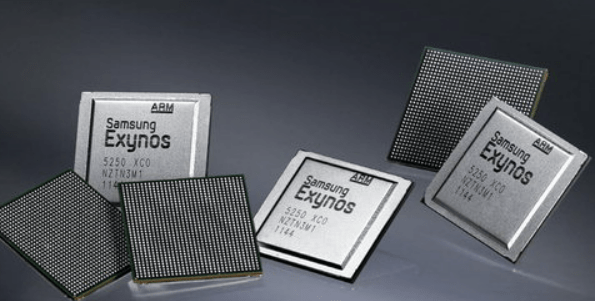
Beyond Memory: Why the Next Alpha Lies in the “Non-Memory” Ecosystem
For years, the AI narrative was dominated by memory—specifically HBM and DRAM. But memory alone cannot scale the future of AI. As AI workloads explode in complexity, the true bottlenecks are shifting toward the non-memory domain: controllers, network chips, and advanced packaging.
Here’s why 2026 marks the definitive turning point for the non-memory ecosystem.
1. The Shift: From Capacity to Connectivity
AI scaling is hitting three unavoidable walls: compute demand, data movement, and heat. The constraints are no longer just about how much data we can store, but how fast and efficiently we can move it.
- The Relentless Spec Upgrade: AI forces a continuous migration to PCIe 6.0/7.0 and advanced nodes (7nm and below).
- The Retimer Surge: As signal integrity becomes critical at higher speeds, the demand for retimers per server is skyrocketing.
2. The TSMC Bottleneck and the “Korea Alternative”
Today, AI non-memory production is dangerously concentrated at TSMC. However, cracks are appearing in the supply chain:
- Capacity Ceiling: Shortages in CoWoS packaging and leading-edge nodes are leaving many AI chip designs stranded without production slots.
- The Geopolitical “De-China” Factor: As U.S. restrictions expand into mature nodes, reliance on Chinese fabs (like SMIC) has become a structural risk.
- The Release Valve: Korea is emerging as the most practical alternative. With geopolitical alignment and a U.S. manufacturing footprint, the Korean non-memory value chain is being re-evaluated by necessity, not hype.
3. Strategic Picks: What Matters and What to Avoid
Not all non-memory is created equal. To find alpha, we must distinguish between legacy commodity chips and AI-driven essentials.
| What to Watch (AI-Driven) | What to Avoid (Legacy) |
| Advanced Nodes: PCIe 6.0/7.0, Retimers, AI ASICs | Generic Logic: Basic MCUs and Power Management ICs (28nm+) |
| Mission-Critical Testing: Doosan Tesna (Yield gatekeepers) | Low-End IoT: Simple appliance SoCs with no AI linkage |
| Design Houses: AD Technology (The bridge to advanced fabs) | China-Dependent Chains: High IP and geopolitical risk |
4. The Hidden Power Players: Testing and Design
- Doosan Tesna (The Testing Bottleneck): As nodes shrink, defect tolerance approaches zero. Testing is no longer optional; it is the final gatekeeper of AI and automotive chip quality.
- AD Technology (The Design Bridge): Advanced nodes are too complex for fabless firms to navigate alone. Design houses are becoming indispensable partners as Samsung Foundry expands its 3nm and 2nm presence.
Final Thoughts
If memory built the foundation of the AI era, non-memory defines its ceiling. As TSMC capacity tightens and AI demands ever-higher specifications, the Korean non-memory ecosystem is entering a structural turnaround. The real AI semiconductor cycle is just beginning.
 The Morning Calm Notebook
댓글 남기기